
Mercury spends about seven weeks in each house of a natal chart before sliding into the next one. That single mechanical fact has done more for my workplace communication than any training module I've ever clicked through as a project manager, mostly because it doesn't tell me what to say — it tells me where I'm most likely to misread a room.
I know how that sounds: a project manager running sprint boards on one monitor and a birth chart on the other, insisting a planet none of us can influence has opinions about a Slack thread. I can't prove that. Astrology hasn't been validated by anything more rigorous than my own pattern-matching, and I'd rather admit that up front than dress this up as a system that works for everyone.
Before any of this, I tried a mood journal for a while — three months of one-line notes on how meetings went. I never found a clean cause-and-effect thread in any of it, because mood is too noisy a variable and half of it depends on whether I'd eaten lunch. The moment that actually hooked me was smaller: flipping back through a quarter's worth of old project notes and noticing my single most productive stretch of that year lined up almost exactly with a Mars transit through Capricorn — not even Mercury, which is what eventually got me looking at transits as real data instead of horoscope filler. I started digging into the mechanics after a mention of Birth Charts for Skeptics, mostly to check whether there was any structure behind it or whether it was just personality-test language dressed up as destiny.
The 88-Day Mercury Transit Cycle, Explained for Project Managers
In astronomy, Mercury completes an orbit in roughly 88 days, and in a natal chart that translates to a fast lap through all twelve houses — a new house every several weeks. A transit just means the planet is currently passing through a specific section of your chart, spotlighting a different area of life for a while. Framed that way, tracking it isn't much different from watching a project move through phases on a timeline: same team, same goals, different constraints depending on where you are in the schedule.

What I didn't expect, tracking this against real project outcomes rather than daily horoscopes, is that a house placement usually flags a blind spot rather than a strength. If Mercury's in the house that governs local, day-to-day communication, the instinct is to assume you're being unusually clear. More often it means you're over-explaining to the point where people tune out halfway through the email. It's a mirror, not a spotlight. Readers chasing the bigger-picture version of that idea — how a placement points toward purpose rather than just Tuesday's inbox — have gone looking at Moon Reading vs Soul Manifestation for finding your life purpose, but that's a different question than the one this piece is answering.
Does the 10th House Really Make You a Better Communicator?
Not automatically, and that surprised me. The 10th house governs career visibility in a natal chart, so the assumption — mine included, at first — is that Mercury sitting there turns you into the sharpest voice in the room. What actually happened was the opposite: I got overly focused on how I was coming across, polishing the delivery so hard that I missed what my team actually needed from the conversation. The data pointed at a visibility problem, but the problem was inward, not outward.
Move Mercury into the 11th house — networking, group dynamics — and the common advice flips to "this is your moment to shine in a room full of people." That wasn't my experience. My blind spot there was assuming everyone in a thread was tracking the same context I was, when half of them clearly weren't. Once I noticed the pattern, I started sending the follow-up message I'd normally skip, just to confirm alignment instead of assuming it. That's a small habit, but it's the kind of thing a transit is actually good for: not predicting the outcome, just flagging where to double-check.
The 4th House Is Where the Documentation Backlog Gets Done
The 4th house is traditionally about home and privacy, and most career-focused astrology content treats it as a dead month for work. I nearly wrote off a stretch of the year on that basis before I looked at my actual backlog: months of documentation, SOPs, and internal audits I'd been putting off in favor of client-facing visibility — the same 10th-house trap from earlier. So I flipped the approach. Instead of pushing for more meetings, I went internal: cleaned up the team wiki, rewrote templates nobody had touched in a year. It turned into one of the more productive stretches on record, mostly because I stopped trying to force a "foundational" period to behave like a "visibility" one.
None of this makes me a career coach, and I want to be clear about that. If your job is genuinely on the line, a spreadsheet correlation is not a substitute for talking to an actual professional. What worked for my own workflow was letting the data suggest which kind of work fit which stretch of time, rather than fighting the current every single week.
Is Mercury Retrograde a Bigger Deal Than House Placement?
People ask me this a lot, expecting the answer to be yes, since retrograde gets all the cultural attention. For workplace stuff specifically, I've found house placement matters more day-to-day — retrograde is its own topic with its own mechanics, and I won't rehash them here since that's a deeper conversation than this piece has room for. What retrograde windows do add is a kind of advance warning: when one lines up with a rough aspect involving Mercury, I go into anything screen-share-dependent expecting friction instead of being blindsided by it.

That's roughly what happened during a stakeholder presentation that fell apart at the worst possible moment: screen share froze, audio lagged, the call turned into a slideshow of pixels. My old reaction would have been to panic alongside my lead developer, who was visibly sweating next to me. Instead I felt strangely calm, switched to a backup line, and narrated the slides from memory until the connection caught up. We kept the deal. That calm didn't come from any kind of ritual. It came from already expecting a rough patch and having a plan for it, the same way you'd carry an umbrella because the forecast said rain. Sometimes the more useful skill covered by what your 12th house placements mean for your hidden strengths isn't what you say in the moment. It's knowing when to hold information back until the timing actually works.
Separating Mercury's Houses From the Rest of Your Chart
A few other questions come up often enough that they're worth answering directly. People sometimes ask whether they should be tracking their moon sign instead; moon-related patterns show up more in mood than in memos, which makes it a genuinely different log than the one I keep. Others want to know if lunar cycle phases matter more than a house transit for timing a hard email; they're real, but they run on a different rhythm entirely, closer to weekly than to weeks-at-a-time. And the North Node question comes up constantly, usually phrased as "isn't this really about my life purpose," but it isn't, at least not in the way I'm using Mercury here. Those are worthwhile questions. They're just not this one.
Rising sign and midheaven get lumped in too, and I understand why, since both sit in the same chart. In my experience they matter more for the first impression you make walking into a room than for what happens once you're already three replies deep in a Slack thread; that's a professional-image layer, not the communication-timing layer Mercury runs. And if you want the full rundown of what all twelve houses represent in general, that's a longer conversation than this post is set up to have; here I only care about the handful that actually show up in a normal workweek.
So How Do You Actually Track This at Work?
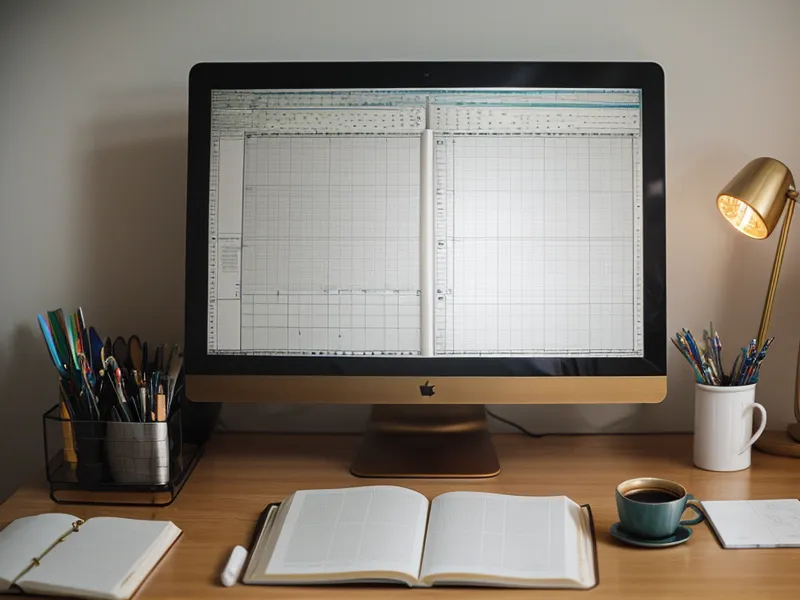
The system is unglamorous: a spreadsheet, tucked a couple of tabs away from budget projections so nobody screen-sharing over my shoulder asks questions, with Mercury's current house next to whatever project milestone is due that week. Before I flag a miscommunication as someone else's fault, I check which house Mercury's sitting in for me; it's not always the answer, but often enough it changes how I read the situation.
A friend of mine, Celine, will send a voice note that runs past ninety seconds about a decision she could've texted in five words, and that's just wired into how she communicates; no house transit is going to change that, which is a useful reminder that a chart explains tendencies, not personality. On the more skeptical end, a guy named Emmett, who I first ran into arguing in a subreddit thread about Saturn return timing, still plots every transit out on paper before he'll trust a spreadsheet with it. I've gone fully digital myself, but I get the instinct — you want a trail you can double-check by hand, not just a cell that updates on its own.
If you're going to try any of this, the actual takeaway isn't "trust the transit." It's this: the next time a routine update blows up into something bigger than it should have, check what house your Mercury is passing through before you assume the other person is the problem. Half the time the placement points back at your own delivery, not theirs — and that's a more useful thing to know than any horoscope has ever told me.
None of this has turned me into a different kind of manager, and I'm not claiming astrology is proven by any standard a scientist would accept — it isn't, and I don't pretend otherwise. I also have no medical training, so if you're dealing with real workplace anxiety or burnout, this isn't a substitute for talking to an actual professional. What I can say is that treating Mercury's house position as one more input, alongside deadlines and team capacity, has made me pay closer attention to my own blind spots. That's a smaller claim than "the planets are guiding you," but it's the one I can actually stand behind.