
Mercury retrograde gets blamed for every dead laptop, missed deadline, and reply-all disaster. Saturn barely gets mentioned outside a birth chart PDF, and that's backwards. In my running comparison between natal chart placements and actual career decisions, Saturn is the sign that keeps matching real friction — not Mercury. The report that finally explained why, a soul manifestation report built around proper natal chart analysis instead of daily sun-sign horoscopes, is also the thing that corrected the biggest misconception I had about my own Saturn sign: that it was a fixed setting I'd read once and file away.
Your Saturn Sign Isn't the Life Sentence Everyone Thinks It Is
The version of Saturn that shows up in most horoscope apps treats your sign as a fixed character flaw: rigid, restrictive, assigned at birth, done. That's the myth. It's also the reason I dismissed my own Saturn placement for a while — Saturn in Aquarius sounded like a life sentence to be the office rebel who never gets promoted, which is not exactly a flattering read on a project manager's career page.
In traditional astrology, Saturn rules Capricorn and gets tied to restriction, structure, and time itself — Chronos, not the softer stuff. It orbits the sun roughly every 29.5 years, spending about two and a half years in each zodiac sign, and your Saturn sign is wherever it sat the moment you were born. None of that is in dispute. What's wrong is treating that placement as static.
If you want the full breakdown of what each planet, sign, and house actually does, I laid that out separately in what each planet, sign, and house means. Saturn is the one placement in that list that people read once and shelve, which is exactly backwards.
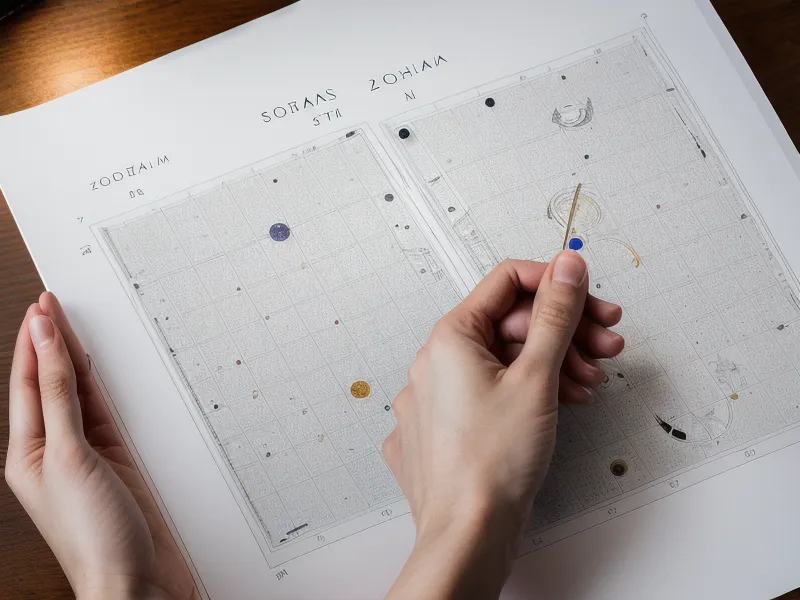
The Real Shift: Why Your Saturn Sign Reads Differently Every Few Years
Saturn moves roughly ninety degrees through the zodiac every seven years, which lines up with checkpoints most people recognize without knowing why: a career pivot around one of those marks, a sudden loss of patience with a job that used to feel fine, a stretch where discipline finally clicks. A soul manifestation report is what finally connected that pattern to my own Saturn in Aquarius — instead of "you're the rebellious one," it read as a specific, recurring tension between wanting to modernize a process and feeling obligated to protect the systems already in place.
None of this is a new curse arriving every seven years. It's one long, roughly thirty-year loop with checkpoints along the way, and a decent report treats each checkpoint as a chance to recalibrate rather than a punishment. That's the correction that matters: not "what does my Saturn sign mean," but "what does my Saturn sign mean right now, at this checkpoint."
I've got a printed annual transit calendar taped above my desk with color-coded marks I made myself, and the two-and-a-half-year Saturn blocks are the only ones that reliably predict a change in what kind of work actually holds my attention.

Why Does Mercury Retrograde Get All the Attention Instead?
Before any of this, I downloaded a daily horoscope app that pinged me every morning with something vague about opportunity and self-care. I stopped opening it after about ten days — it never told me anything specific enough to test against an actual outcome, which is the whole appeal of tracking Saturn instead of a sun-sign forecast.
My coworker Desmond, who reads the one-star reviews before anything else whenever he's deciding if a tool is worth his time, would probably give a soul manifestation report the same treatment. I know, I know. That's not exactly a peer-reviewed method either, but the daily horoscope app deserved that kind of skepticism, and Saturn transits held up under it in a way five-sentence affirmations never did.
Mercury retrograde gets the panic because it's short, frequent, and easy to blame for a bad week. Saturn's slower, so the pattern only shows up if you're tracking something over time — which is how I noticed, flipping through my planner on a walk around Washington Park one Sunday, that four of the five projects I'd started on pure impulse over the past year landed within a day of a new moon. That's a lunar cycle pattern, not a Saturn one, but it's the same habit: write it down, don't assume, check the dates later.
Reading a Soul Manifestation Report Without Buying the Static Version
A soul manifestation report is genuinely useful for translating Saturn's jargon (squares, oppositions, all the vocabulary that makes eyes glaze over) into something closer to a risk assessment. Mine named a fear of public failure specifically enough that it stopped feeling like a horoscope and started feeling like feedback from someone who'd actually seen my calendar. The mistake is stopping there, reading it once, and treating that single reading as the whole story for the next few decades.
I went deeper into how that held up over a longer stretch of testing in my Soul Manifestation review after testing the report for a long stretch, and the short version is that the report's value comes from checking back in at each checkpoint, not from the first read.
How to Check Your Saturn Timing Before a Career Decision
Look, here's the practical version: before you take your Saturn sign at face value, check where transiting Saturn currently sits against your natal placement, not just the sign you were born under. If it's squaring or opposing your natal Saturn, that's a maintenance window — clean up technical debt, tighten a process, don't launch something new. If it's trine or sextile, that's closer to a building window. Treat the sign as the theme and the current transit as the timing.
None of this happens in isolation, and it's worth being upfront about what a Saturn sign doesn't cover. It isn't your Saturn return, the specific transit most people hit in their late twenties that deserves its own explanation. It isn't your rising sign, which shapes how that discipline gets read by other people rather than how it feels from the inside. It isn't the moon-sign-versus-sun-sign debate that trips up beginners before they've even pulled a full natal chart. And it isn't your north node, which points at the direction you're disciplining yourself toward rather than the discipline itself. Saturn's house placement adds another layer on top of the sign, and career-focused readers usually reach for the midheaven before they reach for Saturn — fair, since the midheaven says what you're aiming at, while Saturn says whether you can actually sustain it.
If you're deciding between different types of readings in the first place, I compared Moon Reading vs Soul Manifestation for finding your life purpose elsewhere, since they answer different questions entirely. Saturn was never the planet trying to punish me. It was the one keeping score on whether whatever I built during the easy years was actually going to hold.