Mars sits exactly on my Midheaven, inside the 10th house of my natal chart. That's the entire discovery that kicked off this whole hobby. One placement sits on the most career-coded point in the wheel, flagged in the same browser tab where I track actual sprint boards. During a bad retro, I'd catch myself half-listening to a teammate steamroll the timeline while wondering whether some passing Midheaven transit explained why that particular week felt like open warfare, and whether logging planetary movements next to project notes amounted to a halfway decent career astrology instinct or just confirmation bias with a spreadsheet attached.
The Placement I Used to Resent
For years, this specific placement felt like a design flaw. I wanted the kind of ownership that comes with running a major initiative end to end — calling the shot, owning the fallout, no committee required. At the same time, I was terrified of being read as the aggressive one, the project manager who turns every disagreement into a turf war. Push too hard, and people visibly recoiled. Hold back, and I sat on calls fuming while a weaker plan sailed through because nobody wanted the fight.
Mars's exaltation in Capricorn is the detail that actually cracked this open for me. I used to think planetary dignity, the old idea that a planet behaves better or worse depending on its sign, was medieval set dressing, the astrology equivalent of a personality quiz forcing everyone into a type that fits most people well enough. But Capricorn is the sign most people associate with the 10th house anyway, and an exalted Mars there isn't a reckless brawler, it's closer to a surveyor working against a deadline. That distinction mattered more once I separated what's natal from what's transiting: this is a placement I was born with, not a Mars transit crossing my Midheaven for a few weeks before moving on. One is permanent wiring. The other is weather.
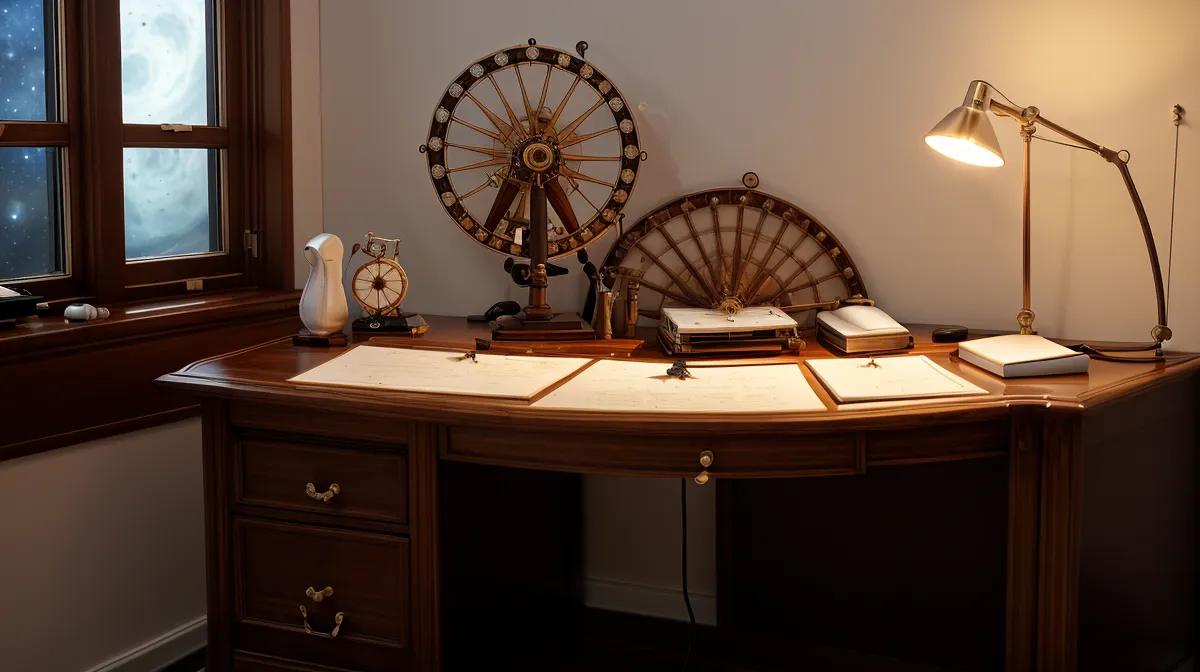
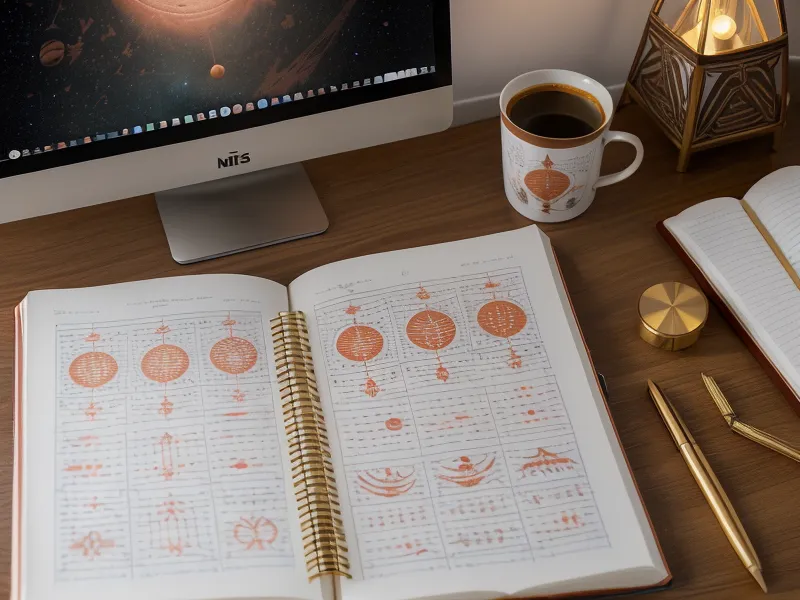
On my actual desk, that distinction is easier to see than explain. One monitor runs the project tools I actually get paid for; the other keeps a chart wheel open in a browser tab, usually mid-argument with a second app over where exactly a house cusp falls. A printed transit calendar hangs above the setup, marked up in two colors of pen for whatever I'm tracking that month, next to a faded marker smudge from a decision matrix I sketched out one January and never managed to wipe off the desk. A can of sparkling water sits within arm's reach of the keyboard more often than not, and more than once I've let the coffee go cold mid-argument between those two chart apps, too annoyed at their disagreeing math over house cusps to notice the mug.

Why a Three-Month Mood Log Told Me Nothing
Before any of this, I tried the boring, responsible version of self-tracking: a daily mood journal, kept for three months, meant to catch whatever was driving my swings between overconfidence and silent resentment at work. It told me nothing useful. I could see that some weeks were rough and some were fine, but I couldn't find a single reliable trigger — not workload, not sleep, not caffeine, not who was in the meeting. The data just sat there, flat and unhelpful, like a weather log with no weather in it.
A guy I argue with on an astrology subreddit, Emmett Birch, talked me into narrowing the net instead of widening it. Emmett disputes nearly every interpretation I throw at him — he thinks my read on Mars in the 10th house is overconfident at best — but he's never once argued with the timing data itself, which is a strange kind of consistency I've come to respect. His suggestion was blunt: stop logging my mood in general and start logging one specific behavior against one specific placement. So instead of three more months of vague journaling, I picked a narrower test, tracking every time I volunteered for, or avoided, a high-visibility conflict at work, to see whether Mars had anything to do with it.
Turning the Archetype Into Something I Could Actually Test
The test began small, over what became roughly seven months of informal tracking. Nobody on my team wanted to own high-risk escalations — when a release date slipped or an executive got loud, team leads usually hid behind a diplomatic email chain. I started volunteering instead, for the ugly post-mortems, the executive feedback nobody wanted to sit through, the delivery roadmap that needed rebuilding from scratch after a bad quarter. Stepping into that line of fire didn't read as aggression the way I'd always feared it would. It read as leadership. People don't experience a 10th-house Mars as hostile when it's aimed at an actual problem, they experience it as someone willing to hold the line while everyone else stalls.
When Ambition Starts Eating Itself
A few months in, the experiment started cracking. Mars doesn't do patience by default, so I began treating every meeting as a hill worth dying on — architecture disputes got battle-ready arguments, a slow approval got an instant escalation, and my calendar turned into a string of tactical sprints instead of anything resembling a career. The result was exhaustion, mine and everyone else's. Mars wants a decisive win today; actual professional authority gets built through pacing, alliances, and a willingness to let small things stay small. Fire the cannons every day and you don't end up respected, you end up avoided.
What Changed Around Week Twelve
Everything shifted when the company announced a restructuring that merged two departments and left reporting lines blurry enough that a neighboring director tried to slide an unvetted scope package straight into our backlog during a packed cross-functional meeting. Old me had exactly two settings for that kind of situation: swallow it and resent the decision for weeks, or push back hard enough to damage the relationship. I did neither. I laid out our actual delivery capacity, walked through what the extra scope would cost our real deliverables, and said plainly that we wouldn't take ownership without more staffing. No raised voice, no ceding ground either.
There was a long, uncomfortable silence in that room, the kind where everyone studies their laptop instead of looking up. We held the line anyway. The scope got renegotiated, the staffing request got approved, and I drove out to Red Rocks Amphitheatre in Morrison that evening just to sit on the steps and let my ears stop ringing. That's where it actually settled for me, not some dramatic revelation, just a quiet recalibration that the whole point of this placement was never about winning the room.
Around week twelve of logging all this, scrolling back through my planner on a quiet Sunday, I noticed something I hadn't been looking for: four separate new moons over the stretch I'd tracked so far, each one landing within a day or two of me spontaneously kicking off a new initiative I hadn't planned to start that week. I don't fully know what to do with that pattern yet, and I'm wary of the part of my brain that wants to turn four data points into a law. But it's the kind of coincidence that keeps a spreadsheet habit alive.
A Working Framework for Mars in the 10th House
Here's the version of this I'd actually recommend to someone else, built out of that seven-month test and everything that went wrong inside it. Pick high-stakes fires instead of brushfires, saving the confrontational instinct for issues that actually threaten a deliverable or a teammate's workload, and letting smaller disputes play out without you in the ring. Volunteer for the hard accountability before someone assigns it to you; people trust a leader who takes an ugly meeting and speaks plainly in it far more than one who dominates easy ones. Trade speed for durability on purpose: when the urge to force an immediate resolution shows up, sit on it for a day before acting, because Mars wants a win today and a reputation that holds for years runs on a completely different clock. Treat the visibility that comes with this placement as a shield for your team rather than a sword for yourself; that's the version of 10th-house Mars that actually earns something lasting, and it's the subject I went into in more depth in How to Improve Your Professional Reputation Using 10th House Astrology.
If your chart stacks even more weight around that same career axis, multiple planets bunched into the 10th house rather than just Mars, the pacing problem gets worse, not better, and I wrote separately about How to Manage Career Intensity When You Have an Astrology Stellium for that specific situation. My friend Celine, who has made the same four dinners on rotation for years now and considers the whole question of what to cook permanently solved, thinks my chart hobby is the equivalent of overthinking a recipe that already works. She might be right. But the recipe I had before, push hard or go quiet, wasn't working, and whatever is actually happening with this placement, treating ambition as something to pace rather than something to win has held up longer than the mood journal ever did. If work stress starts bleeding into your health or your relationships, that's a conversation for an actual professional, not a chart.
None of this makes Mars in the 10th house a verified fact about how careers work, and I'd be suspicious of anyone who told you otherwise. What it gave me was a workable split: hold the line in public without needing every disagreement to become one, and save the actual fight for the weeks it matters. That's the whole framework, really, not conquest, just better timing about when to stand still and when to move.