
Desmond holds his lunch cooler up to the webcam, the labeled, compartmentalized one he hauled back from some conference, and pops open a section for a snack while asking why I bumped code review off today's agenda. I don't have an HR-sanctioned answer for that. On my second monitor, next to the project board, I've got a chart pulled up that flagged today's transiting moon as bad news for that particular meeting. This is usually where I explain, again, that I'm not reading horoscopes. I've been logging astrology data — natal charts, lunar transits, the whole system — against real workplace dynamics long enough to land on a moon reading opinion that puts me at odds with most moon sign compatibility advice out there, and it changes how I think about team management day to day.
A reader named Luisa Herrand emailed me not long ago — numbered list, clear subject line, the whole structured package — asking whether she should be screening job candidates by moon sign before extending an offer, the same way some guides suggest sorting a team by "compatible" elements. That question is the myth in a nutshell: the idea that moon sign compatibility works like a seating chart, where you cluster the harmonious pairings together and keep the clashing ones apart. It's backwards, and building a team around it will hurt you more than it helps.
The Moon Sign Compatibility Myth in Team Management
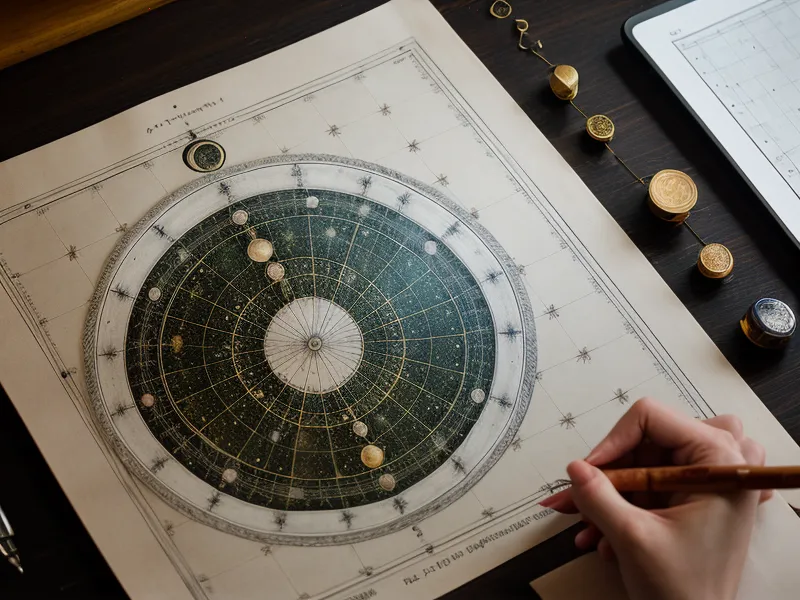
Most compatibility guides start from a mistake: they treat someone's moon sign like a second sun sign, a fixed identity trait you slot into a personality grid. I used to think moon signs were astrology's participation trophy anyway — everyone gets one, so what's the point — until I started tracking transits against real meetings instead of treating them as another birth-chart footnote. Your sun sign, your rising sign, even your midheaven placement are relatively static markers of the persona you present and the career image you build over years, and that's its own subject entirely. The moon moves faster than any of that. Reading it well means paying attention to where it sits in the sky right now, not just where it sat the day someone was born, and that's the part most workplace astrology content skips.
Why Moon Reading Isn't Sun Sign Reading
Here's the piece that took me longest to sort out: a natal moon, the sign it occupied at someone's birth, is fixed forever. The sky's moon keeps moving through all twelve signs roughly every month, and it's that transiting moon — not anyone's birth chart — that sets the emotional tone of a Tuesday planning session versus a Friday retro. Guides that only look at natal placements are reading the wrong clock.
None of this is Mercury retrograde messing with your inbox, and it's not a void-of-course moon making you hesitate before signing a contract — those are their own rabbit holes. It's also not the slow-moving stuff: a Saturn return reshaping your thirties, a north node pointing you toward different work, or a progressed moon shifting your baseline mood year over year. Team-level moon reading runs on a much shorter clock than any of that, and it doesn't require knowing anyone's houses or aspects to be useful — just which element the moon is passing through this week.
Individual differences still matter, obviously. On past teams I've noticed the Earth-moon people anchor a room while Fire-moon folks get restless in a slide-deck-heavy meeting, which is a big part of why how your moon phase at birth impacts your professional strengths in the first place. That's a baseline temperament, though, not a screening tool for who gets hired.
What Happens When 'Incompatible' Moons Collide at Work
Go back to Luisa's question. Screen a team for moon sign compatibility and you'll get exactly what the guides promise: harmony. You'll also get a group that misses obvious problems because nobody in the room is wired to challenge the plan out loud. I've watched an all-Earth-moon group document a project beautifully and never once take a necessary risk. The clash between, say, a Scorpio moon's intensity and a Gemini moon's tangents isn't a bug to manage around — it's the mechanism that catches a flaw before a client does. I've written before about balancing your astrology elements and personality for better teamwork, and the short version is: stop building for harmony and start building for productive friction.
I'll admit the skeptic in me still resists this some days. A birth chart correlating with a Tuesday standup sounds like the kind of thing you'd laugh out of a data review, and I don't blame anyone who does. But when I pulled up my Q3 project notes, the sprints that shipped early clustered around the same transiting placement — Mars moving through Capricorn — and the slow ones didn't. That's one data point, not proof, and I treat it the way I'd treat a weather forecast rather than a guarantee: useful for deciding whether to bring an umbrella, not something to bet the whole project on.
I tried shortcutting this once by downloading a daily horoscope app, hoping it would do the pattern-spotting for me. I deleted it after about ten days. The one-liners it pushed were generic enough to apply to anyone on any team, and they told me nothing about why one specific meeting kept derailing — no mention of the moon, the element, or which sign was even active that day. If you want something usable for team management, you need the actual transiting position, not a horoscope headline.
Building Better Workplace Dynamics Without Chasing Harmony
The rule I actually use has nothing to do with hiring for compatibility. On a day when the moon sits in an Earth sign, I lean on structure — clear documentation, defined next steps, nothing improvised. When it moves into Fire, I keep meetings short and hand people something to act on immediately instead of another slide deck. Water days get a little more room for someone to name the stress out loud before we get to logistics, and Air days are when I load up on data and skip the pep talk entirely. None of it requires reshuffling who sits on the team.
This isn't a replacement for actual HR training or professional mediation, and I wouldn't lean on it for a serious personnel conflict — that's a job for an actual manager, not a spreadsheet full of transits. It's a scheduling variable, not a hiring filter.

That's the same answer I gave Luisa when she wrote back: skip the compatibility screening, keep the mixed-element team, and read the moon's sign the way you'd check a forecast before a big week — then adjust how you deliver the message, not who's in the room.