
What if the thing making you feel like a fraud at work is the same thing making you good at your job? That question has been stuck in my head since a project of mine got shelved a few weeks back, and chasing it down sent me straight into Chiron placement work — the strange corner of a natal chart that, it turns out, explains more about workplace resilience than any performance review I've sat through.
The short version: Chiron is the piece of your chart astrologers call the wounded healer, and it marks where you feel chronically not-good-enough no matter what the actual evidence says. I've spent stretches of free time cross-referencing astrology and career decisions in a spreadsheet, mostly out of curiosity, and Chiron is the placement that finally explained why some setbacks flatten me and others just bounce off.
The Astronomy Behind a Chiron Placement
Before this gets applied to a routine status meeting, it helps to know what Chiron actually is. Chiron is classified as a centaur, a small solar system body that behaves partly like an asteroid and partly like a comet, discovered in 1977 by astronomer Charles Kowal. In Greek myth, Chiron was famous for healing everyone around him while carrying a wound of his own that never closed, which is exactly the detail that makes the metaphor useful for a workplace.
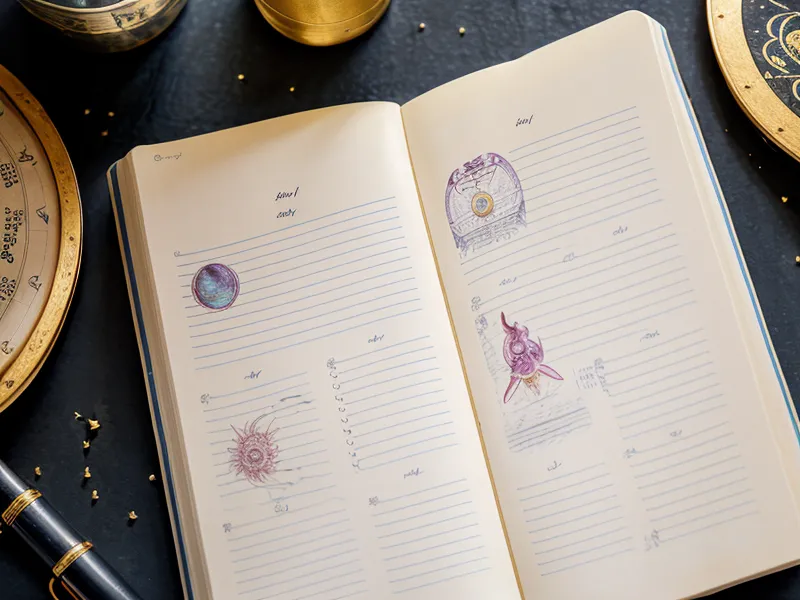
Its orbital period runs about 50.7 years. Because the path is erratic, it moves through all twelve zodiac signs unevenly, spending far longer in some than others. Its placement in a natal chart is marked by a symbol that looks like a key, pointing to the exact spot where you feel chronically broken — no matter how many good performance reviews pile up in your file.
I used to think this was too woo-woo for someone who builds Gantt charts for a living, and to be fair, I'd already wasted time on frameworks that promised the same kind of self-insight. I took every MBTI and Enneagram test I could find online, and the descriptions were broad enough to fit almost anyone on a bad week — none of them explained why one specific kind of criticism could send me spiraling for days while a different kind rolled right off. Chiron, weirdly, did a better job.
Why Career Advice Doesn't Touch a Chiron Wound
Look, I know the standard advice. Don't take it personally. Fail fast and pivot. Treat it as a learning opportunity. All of that works on the ego, and none of it touches a Chiron wound. If your Chiron sign values recognition, getting passed over feels like erasure. If it values security, a budget cut feels like a threat to survival, not an inconvenience.
A teammate pointed out a logic error in what I thought was an airtight project roadmap during a review a while back, and the flare of shame that hit me was completely disproportionate to a schedule fix that took maybe ten minutes. It felt less like a mistake and more like getting caught at something. That gap between the size of the actual problem and the size of the reaction is the tell that Chiron, not just garden-variety perfectionism, is involved.
Most people respond to this by trying to fix it — therapy, confidence workshops, or just working absurd hours so the mistake never happens again. None of that is wrong, exactly, but here's the contrarian part I've landed on after a while of tracking this stuff: instead of healing the wound to get past a setback, it's more useful to treat the insecurity it creates as a working asset.
Turning Insecurity Into Workplace Resilience
My Chiron sign sits in Taurus, which shows up as a low-grade, persistent fear of things running out — money, time, resources, all of it. That fear is also exactly why I'm the most obsessive budget-tracker on my team. I catch risks months before anyone else because the part of me that's scared of scarcity is always scanning for it. I'm not good at my job despite that insecurity. I'm good at it because of it.
When you stop trying to fix the wound, it turns into a diagnostic tool instead. Your Chiron sign tells you where your blind spots sit, and more usefully, where your empathy runs deepest — the place you feel most broken is usually where you've built the most sophisticated coping mechanisms, and refined enough, a coping mechanism starts to look a lot like expertise.
Take Chiron in Leo as an example: the wound centers on visibility, on being seen, so getting passed over for a promotion can feel like a total rejection of your talent. That same sensitivity tends to make people with this placement excellent at noticing who else on the team isn't getting credit — they know exactly how much it stings to be overlooked, so they stop letting it happen to other people. There's more on how these placements interact with day-to-day team dynamics in an earlier piece on Balancing Your Astrology Elements and Personality for Better Teamwork.
How Do You Actually Find Your Chiron Placement?
Pull up your own chart and look for the symbol that resembles a key — it's often tucked into a house most people never think to check. If the whole thing still looks like a jumble of glyphs and lines, a guide on How to Read Astrology Aspects Explained for Beginners Without Math is a decent place to get your bearings before Chiron makes sense on its own.
From there, it's about noticing how the sign flavors your reaction to setbacks at work, not just filing it away as trivia — this isn't about lunar phases or the slower-moving progressed Moon some people track over decades, it's a single fixed point that doesn't move once you're born.
Chiron isn't the same territory as your rising sign, which is more about the impression you make walking into a room. It's not a Saturn return either — that's a slower, multi-year reckoning that tends to land later. Your North Node points at a longer-arc sense of purpose, not a single bad afternoon, and Mercury retrograde gets blamed for everything from typos to missed flights, which has nothing to do with any of this. Chiron is quieter and much more specific: one placement, one recurring soft spot.
Fire signs — Aries, Leo, Sagittarius — tend to feel a setback as a hit to their identity or their standing to lead, and their advantage is a kind of resilience that comes from having been "burned" enough times to know where the next spark is. Earth signs — Taurus, Virgo, Capricorn — feel it as a failure of competence or a loss of material footing, and their advantage shows up as groundedness, building systems that hold up because they never assumed stability was guaranteed in the first place.
Air signs — Gemini, Libra, Aquarius — experience setbacks as being misunderstood or quietly excluded, and their advantage is objectivity, the ability to pick a failure apart from ten angles because they've spent a lifetime having to justify their own thinking. Water signs — Cancer, Scorpio, Pisces — feel it as an emotional betrayal or a loss of purpose, and their advantage is intuition, sensing a project's mood shift before the data catches up.
What Changed When the Project Got Cancelled
A friend of mine spends most weeknights at the Movement climbing gym over in RiNo, working the exact same problem on the wall for weeks until her body finally remembers the sequence. That's closer to what this kind of pattern-tracking actually feels like than anything mystical — repetition, until something that used to look random turns out to be a shape. Going back through my Q3 project notes around week twelve of keeping a log next to my usual planning docs, my two strongest output stretches of the quarter both landed while Mars was moving through Capricorn. That either means something, or it's just what happens when you go looking hard enough for a pattern in your own data.
That habit of checking is what kicked in the afternoon the cancellation email landed. Before reacting, I looked at the transit chart and saw Chiron making a pass over my Midheaven — the career point that sits at the peak of the house wheel without being a house itself, representing career and public reputation. In the past I'd have spent the evening panic-polishing my resume, certain I was about to be let go. This time I dragged a stylus under the transit date on a printed page until the ink nearly tore through. It's a strange thing to still be doing before walking into a boss's office, but I did it anyway, and then went in.
My boss looked up, surprised, when I told her the numbers were already handled: three developers reassigned to the Q3 initiative, no gap in coverage, a modest cut to the overhead we'd been about to lose. She said something like "you're taking this well," and I just nodded. She didn't need to know I'd spent the last hour double-checking a 50.7-year orbit before walking down the hall. The fear of scarcity that Chiron in Taurus keeps handing me had already forced a Plan B, C, and D into existence. The point isn't healing that fear — it's letting it do its job.
A Three-Step Process for the Next Setback
Next time a logic error surfaces in a review or a budget gets slashed without warning, there's a steadier way to respond than the usual spiral of self-flagellation.
- Name the trigger. Figure out whether the sting is about a lack of recognition, a lack of security, or a fear of looking incompetent, then match it to your Chiron sign.
- Call it a feature. That sensitivity is usually the reason you're good at your job in the first place — if your Chiron sits in Gemini, for instance, the fear of sounding stupid is probably why you're the most well-read person in most rooms you walk into.
- Check your Moon sign too. Chiron shows where the wound sits, but your Moon sign — which runs on completely different logic than your Sun sign — shows how you actually process the stress once it hits, covered in more depth in How Your Moon Phase at Birth Impacts Your Professional Strengths.
None of this makes me a therapist or a career coach — I'm someone who likes data and noticed the sky has an oddly consistent way of mirroring what's going on internally. If a setback is causing real distress, that's a conversation for an actual professional, not a spreadsheet. But if it's just the ordinary kind of hard that work sometimes is, Chiron is worth a look. It won't erase the setback. It might hand you the key to using it instead.
The same caution applies to money and career moves generally — the sky can offer a way to reflect, not a guarantee of a promotion or a shortcut around HR's own gravity. The actual transferable habit, Chiron sign aside, is simpler than any of this: next time a feeling this size shows up over something this small, stop and ask what it's protecting before deciding it's a flaw to fix.