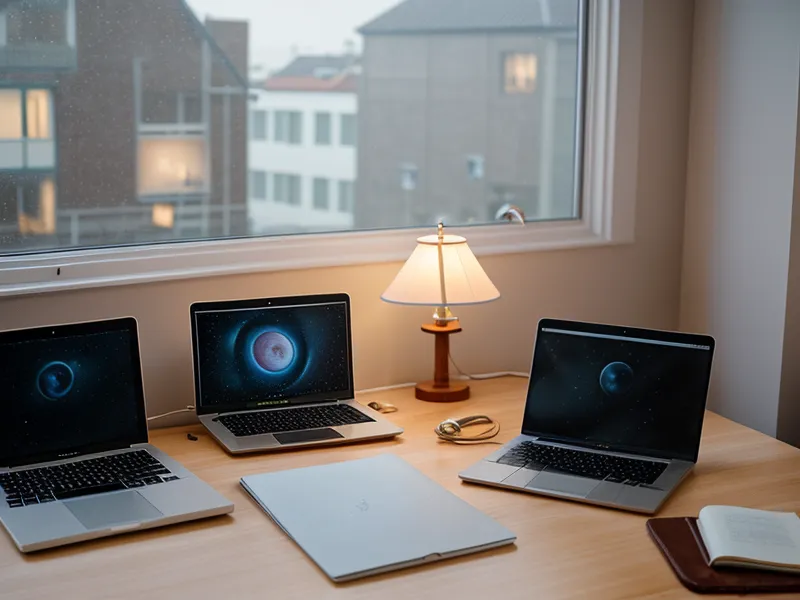
Two chart apps sat open side by side, arguing about where my 4th house cusp begins, while the coffee beside my keyboard went cold and grew a skin. The Q1 launch plan waited in a third tab. That is astrology work-life balance for a project manager: cross-checking house lines when I should have been closing the laptop, and even I could see the joke. Here is the short answer I eventually dug out of all that cross-checking. The fourth house meaning is home, private life, and emotional footing, and it works as the foundation your career sits on. Natal chart basics tell you where that house is; the useful part is noticing when it needs attention.
Look, I know how it sounds. Most days I talk about critical paths and resource allocation, not house cusps. Two years into this hobby, and a bit more than a year into the spreadsheet, I still lean skeptic. But my usual productivity hacks could not explain why some weeks flattened me, and the 12 zodiac houses gave me a framework I could test against my own log. The 4th house did the most work. It turned work-life balance from a fixed target into a rhythm.
Natal Chart Basics: What the 4th House Covers
In astrology, the 4th house is traditionally tied to the Imum Coeli (IC), the lowest point on the meridian in a natal chart. Picture the chart as a building. The 10th house sits at the top as the roof: your career, your reputation, your visible self. The 4th house sits directly opposite, 180 degrees away, as the foundation. It covers home, ancestry, private life, and inner emotional security.
A friend who builds custom mechanical keyboards as a side project gave me a comparison I could use. Nobody admires the case under the keycaps, he said, but every keystroke depends on it, and you only think about it once the board starts to feel wrong. The 4th house is the case. The 10th house is the typing.
Most astrology content about work points straight at the 10th house. When I laid my energy log over transits through the bottom of the chart, it looked like I had been building an elaborate roof on soft ground. During a stretch of 60-hour weeks in early spring, I was "winning" on paper. My log told a different story: a steady drain on my emotional reserves, and no home base to recover in.
I'm not an astrologer or a licensed therapist, so treat this as a peer-to-peer field report rather than professional advice. If you feel genuinely unwell, talk to a medical professional. For the rest of us, who just want to know why we keep hitting a wall, the vertical axis of a chart gave me a clearer picture than any "five tips for productivity" post.
Why Does the Moon in My 4th House Empty My Calendar?
Tracking started with a planner. Flipping through it one Sunday, I counted four new moons, and next to every single one I had scrawled the start of some spontaneous project. That page is why the spreadsheet exists.
The moon passes through every house each month, and it spends about two and a half days in the 4th. The first pattern in my log took about six weeks of entries to show up: my capacity for public-facing work sank on those days, no matter how much caffeine I poured in. Meetings felt like wading through wet sand. What I wanted was to go home and reorganize the pantry.
A career coach came first, and I don't want to knock coaching itself. The advice was solid. It was also generic, and it never accounted for my specific recurring patterns, like this dip landing in the same spot on the calendar over and over. Generic advice cannot see a pattern it never asked to track.
At first I filed the dip under laziness. The 180-degree opposition between the 4th and 10th houses offered another reading: you cannot be fully "on" in the public sphere (10th) while the private sphere (4th) is asking you to recharge. So I stopped fighting it. Deep work, meaning anything without meetings or presentations, now goes on the calendar for those days. It feels like paddling with the current instead of against it. I wrote more about this kind of planning in my notes on how to understand astrology houses and their specific life meanings.
Three hours on a bench at Sloan's Lake Park, no Slack, nothing to do but watch clouds. My PM brain kept objecting that this was wasted time. The transit app said a personal planet was crossing my IC that week, so I decided to file the bench time as maintenance instead of slacking. Skip it, and my theory says the roof starts leaking by Tuesday.
Viewing rest as a structural requirement rather than a reward is the biggest change this hobby has made to my week. To be clear, I cannot prove the transit caused anything. The bench, the clouds, and three hours away from Slack could be doing all the work. Either way, the schedule change is real, and it holds up.
Check the Cusp Before You Plan the Week
The sign on the cusp of the 4th house sets the flavor of what security feels like for you. For some people that means physical comfort. For others it is intellectual stimulation or emotional depth. Mine is a grounded sign, so my balance leans on physical order: when my place is a mess, my project plans turn into a mess too. That correlation shows up clearly in my tracking logs. A weather forecast keeps me honest here, since the cusp tells me what to pack, not what will happen.
Work happens at the office and life happens at home. That was my old assumption, and astrology treats the two as ends of one stick. My logs agree more than I would like: pull one end and the other moves. If your daily flow is the sticking point, my guide on using the 6th house for better daily routines covers the to-do list side of things.
When the 10th House Wins the Argument
Here is where I part ways with much of the spiritual advice online. A common line goes, "If you're tired and the moon is in your 4th house, just stop working." Look, I'm a project manager in a real city. I cannot tell my boss I'm skipping a client pitch because the moon sits at the bottom of my chart.
Focusing only on the 4th house backfires when a major transit is lighting up the 10th. That happened in mid-August. Several planets moved through my career sector, and the pressure to perform was intense. I tried to force balance by logging off early and doing 4th-house self-care, and I was miserable, anxious about the work I was not doing.
Domestic stability, my spreadsheet showed, sometimes depends on career momentum. When I ignore 10th-house demands during a peak transit, the stress at work bleeds into my home life, and the 4th house starts to feel like a cage instead of a sanctuary. True balance is not a 50/50 split every day. It is knowing which end of the axis is carrying more weight and leaning that way. In mid-August, balance meant working late so I could enjoy my weekend without a looming sense of dread.
One Rule That Survived the Spreadsheet
Two years in, I still do not think the planets cause my moods. I am a regular guy with a data-tracking habit, and most days I side with the skeptics. Even so, the 4th house has given me a useful frame for my private life, and it has made me a steadier manager. I notice my own cycles, and I go easier on teammates when they hit their own walls.
The rule I actually use is simple. Before I plan a week, I check two things: is the moon crossing my 4th house, and is a big transit lighting up my 10th? If the moon is at the bottom and the roof is quiet, I move meetings and pitches off those days and protect the recharge. If the 10th is loud, I lean into work and keep one small recharge on the calendar, like a bench at Sloan's Lake Park, so the foundation never gets skipped entirely.
Work-life balance is not a problem to solve with a new app or a better calendar. It is a vertical axis that needs constant adjusting. Some months you are the roof, visible and strong; other months you are the foundation, quiet and underground. Learning when to go underground has been the most productive thing I have done for my career, ironically enough. If you are curious about your own chart, do not stop at your sun sign. Look at the bottom, and check which end of the axis is pulling before you add another floor.