
A Full Moon doesn't actually wreck your odds of a successful launch, though astrology forums repeat that claim because it sounds dramatic. I get asked some version of this constantly once people find out I track lunar cycles as part of my actual career strategy, which is a strange sentence for a project manager to say out loud in a stand-up meeting.
Here's the short version, since I don't like burying a point under three paragraphs of scene-setting: the moon doesn't decide whether your launch succeeds or fails. What the data-tracking habit actually does is separate "good idea, wrong timing" from "bad idea, any timing," two failure modes that feel identical when you're mid-crisis and just want something to blame. I first tested this idea with a single personalized reading a while back. That whole experiment is written up in I Got My Moon Reading Done and Here Is What Happened — and this is the longer, spreadsheet-shaped version of the same question.
That single reading wasn't enough data for someone with my job, so I built an actual tracking sheet: one row per decision, moon phase logged, outcome scored. Before getting into what the numbers say, I want to name the myth directly, because it's the one I hear most: people treat "New Moon good, Full Moon bad" like a coin flip, the same energy as a fortune cookie that happens to be right sometimes.
Full Moons Aren't Cosmic Bad Luck
The coin-flip version of this myth assumes the moon hands out luck, good on one night and bad on another, for no describable reason. That's not what a lunar cycle is, and treating it that way is exactly why so many people try it for a month, get one bad data point, and quit. A phase isn't a luck dial. It's closer to a recurring status in a project timeline — kickoff, build, review, close — except the calendar for it runs roughly twenty-nine and a half days instead of a fiscal quarter.
What actually correlates with outcomes, at least in my own decisions, isn't luck at all — it's visibility and momentum, which shift predictably across the cycle whether or not anyone in the room believes in astrology. New Moon periods tend to be quiet and low-scrutiny. Full Moon periods tend to be loud, reactive, and full of people who are already stretched thin. None of that requires a mystical explanation, and I'd rather admit upfront that I don't have one.
This isn't about your natal chart placements, which is its own rabbit hole entirely. It isn't about whether your moon sign and your sun sign are currently in some kind of standoff, either. It isn't your Saturn return, which runs on a nearly twenty-nine-year clock instead of a twenty-nine-day one. And it isn't the North Node conversation about long-term purpose. This is narrower: it's about timing one specific decision against one specific two-to-four-week cycle.
The Four Lunar Phases Nobody Explains Clearly
New Moon is the reset point — the sky goes dark, and in practice, this is when I've noticed people, myself included, are most open to a blank slate. Waxing phases follow, building toward the Full Moon, and this is the "build" stretch: momentum accumulates, more resources show up, more people say yes to things.
Full Moon is the peak — maximum visibility, maximum illumination, maximum everyone-is-watching. It's culmination, not creation, which is why launching something brand new here tends to fight the phase instead of using it. Waning phases come after, pulling back toward the next New Moon, and that stretch is built for review, cuts, and closing things out rather than starting them. Once you see the cycle as four functions instead of two moods, "good moon, bad moon" stops making sense as a framework.
My Data Says New Moon Beats Full Moon for Career Calls
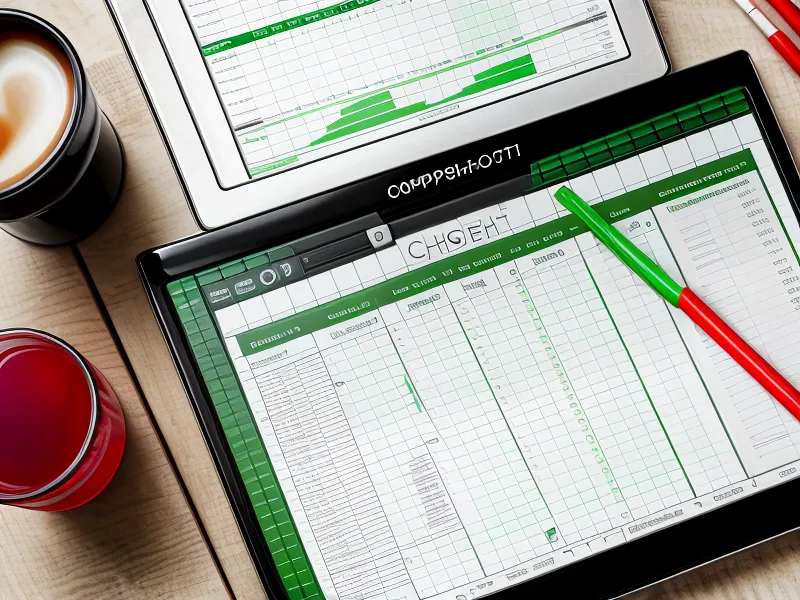
Across one block of decisions I logged, I tracked forty-two calls that actually mattered: vendor hires, architecture pivots, go or no-go decisions, not which burrito place to pick for a team lunch. Thirteen of those were kicked off within roughly forty-eight hours of a New Moon, and eighty-five percent of them landed well — resources showed up when needed, stakeholders stayed unusually agreeable. Ten were finalized or launched during a Full Moon window, and only thirty percent hit their original target, with the rest tangled in server issues, scope fights, or budget clawbacks nobody saw coming.
My neighbor Hiroshi Namba, two floors up, has kept a handwritten sleep-quality log every night for years, and when I finally told him what my spreadsheet was tracking, he didn't blink — he just asked what my sample size was, like that was the obvious first question. It kind of was.
Zara Willetts, a UX researcher who heard about the tracking sheet through a mutual friend, emailed me the same afternoon with methodology questions, which is either the most flattering or the most unsettling response I've gotten to a hobby spreadsheet. She treats the whole thing as a testable hypothesis rather than a belief system, which honestly lines up with how I'd rather people approached it.
Does Timing a Launch Around the Sky Actually Work?
I know, I know. None of this holds up if a skeptical coworker asks for a control group, because I don't have one. What I have is a biased narrator, a decision log, and no way to prove the forty-two calls weren't shaped by something else entirely, like the fact that Full Moon weeks at my company also tend to line up with quarter-end pressure. I hold onto that doubt on purpose. It's the same doubt I'd raise if someone showed me this exact spreadsheet at a dinner party.
Look, a tool like Moon Reading is what got me past the daily-horoscope stage in the first place, since it breaks a chart down by actual transits instead of one sun-sign paragraph written to fit a twelfth of the population equally badly. It's what first showed me that my particular chart handles Full Moon pressure worse than most, which is a specific, checkable claim rather than a vague one. (If what's actually derailing your team is retrograde season rather than moon phase, I've broken that down separately in How to Track Mercury Retrograde Without Losing Your Mind at Work — I used to think that transit was just an excuse people invented for missed deadlines, until I started logging it too and found out it wasn't nothing.)
What Doesn't Work: Podcasts, Vibes, and Other Non-Frameworks
For a stretch, I tried solving my career-timing problem the normal way: burning through career-pivot podcasts on the commute. They were motivating for about twenty minutes and useless by the next actual decision. Good pep talks, zero repeatable framework, nothing I could rerun the next time a similar call came up. That's the gap the spreadsheet ended up filling. Not inspiration — a method.
Somewhere in that same stretch, on an ordinary Sunday, I was cross-referencing a project planner against a phase calendar and noticed something I hadn't gone looking for: four separate New Moons, four separate moments where I'd started something on pure impulse with zero planning, and every single one had turned into a real project instead of a false start. I also spent part of that period testing the Billionaire Brain Wave audio program, which isn't astrology at all but fits the same "optimization" bucket I've grown fond of — it's built for focus, not forecasting, and I used it mainly to cut through the mental fog that shows up for me during lunar transitions. Around the same window I tried a version of How to Do a New Moon Ritual for Setting Career Intentions, which sounds far more mystical than it actually is — for a project manager, a ritual is just a kickoff meeting with yourself before the sprint starts.
Try This Before You Trust It
None of this requires believing in anything. Start a sheet with four columns: date, phase, decision, outcome scored one to ten. Run it for a full cycle or two before drawing conclusions, since a single data point proves nothing either direction. Weight New Moon windows toward starting things and Full Moon windows toward finishing or deciding rather than launching, and treat the days right around a Full Moon as a buffer, not a deadline, especially for anything involving a hard conversation or a go-live.
If you want the plain mechanical definition rather than my spreadsheet's spin on it, the Lunar phase article covers what's actually waxing and waning up there, no interpretation attached. More than once I've let my coffee go cold mid-argument between two chart apps that couldn't agree on where one house ended and the next began, which is a fairly good reminder that even the tools disagree on the details.
This doesn't replace a career counselor, a financial advisor, or your own judgment, and it would be careless to suggest otherwise. But if you're already tracking your sleep, your steps, and your macros, tracking one more cycle that's been running since before spreadsheets existed isn't a big lift. A personalized Moon Reading is a reasonable place to get your own baseline before you start the log, without spending hours untangling chart theory first. Just don't blame me when a coworker catches you color-coding a calendar by moon phase.