
One quiet evening last spring after a brutal sprint retrospective, I opened my personal tracking spreadsheet instead of logging off. Everyone fixates on the 10th house for career milestones, but my 10th house was completely quiet while my entire five-year professional roadmap felt suffocatingly narrow.
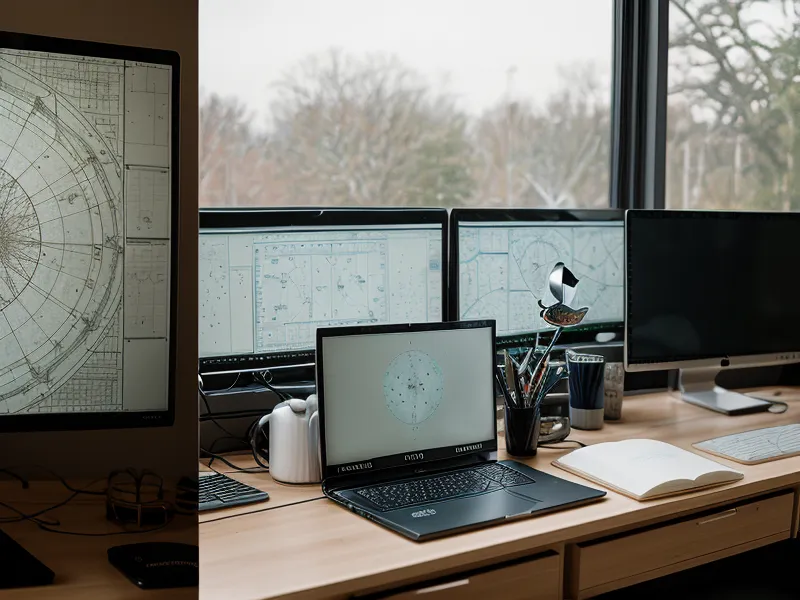
I sat there in the dark, illuminated by dual monitors. On the left screen sat a green-shaded project milestone sheet, neatly mapping out deliverables, stakeholder check-ins, and potential promotion windows. On the right glowed a birth chart wheel generated by an app I had impulsively downloaded months prior. As someone who builds Gantt charts and tracks dependencies for a living in Denver, I approach life with structured workflows. Yet here I was, realizing that chasing another title increase without learning something fundamentally new felt like updating a software version with zero new features.
The Cadent House Before the Peak

In standard natal astrology, there are 12 total astrological houses in a natal chart. If you follow an equal house system, each wedge forms a clean 30 degrees of the 360-degree zodiac circle. Most career advice in astrology circles pushes you toward the top of the wheel—the 10th house, or the Midheaven (MC). That is the realm of public standing, managerial authority, executive titles, and visible achievements. It is the destination everyone lists on LinkedIn.
However, the 9th house sits right behind it. In traditional geometry, the 9th is categorized as a cadent house. Cadent houses process, integrate, and synthesize raw experiences before pushing you into the action-driven angular houses that follow. While the 10th house is the actual summit, the 9th represents the entire conceptual framework, belief system, and higher learning necessary to climb that mountain without falling off from sheer exhaustion.
The natural ruler associated with the 9th house is Jupiter, the planet linked to expansive horizons, philosophy, publishing, and cross-cultural perspectives. When you only look at your career through the 10th house, you risk planning milestones in a vacuum. You map out promotions, title changes, and salary bands without checking whether the underlying work actually expands your knowledge framework.
Logging Patterns in My Professional Spreadsheets
Around mid-summer, I decided to do what I do best: analyze past performance data. I went back through my past four career transitions, cross-referencing my notes on job satisfaction against the planets transiting my natal 9th house. I am not an astrologer, not a psychic, and I hold zero professional cosmic credentials. I am just an analytical project manager who likes messy data sets. But the correlations were hard to dismiss.
In every role where I hit a wall of acute burnout or chronic apathy, my compensation had been fine. In fact, a couple of those jobs came with significant title bumps. What had actually dried up was educational growth, mentorship, and cross-functional autonomy. Whenever my day-to-day operations reduced me to a repetitive production loop with no room to research better methodologies or publish internal guidelines, my work felt dead. I was effectively executing Mars in the 10th house style ambition without giving the 9th house room to breathe.
Look, I know how that sounds. Comparing ancient planetary houses to agile software development feels absurd. Skeptics would argue it is classic confirmation bias—you look for a pattern in past career frustration and retroactively fit astrological archetypes to match. That doubt is completely fair. Yet, looking at the 9th house gave me a useful diagnostic lens that traditional corporate goal-setting templates completely missed.
The Contrarian Reality: Why 9th House Ambition Needs 2nd House Grounding
There is a dangerous trap here, though. In online forums, people love treating the 9th house like an excuse to drop everything, pack a backpack, or dive into expensive graduate degrees on a whim. The conventional advice says, "Follow your higher purpose, expand your horizon, and your professional life will figure itself out."
In my experience, that kind of unrestrained idealism is an express ticket to panic. Focusing on 9th house expansion for career growth often leads to burnout if your 2nd house lacks the structural stability to support these high-minded professional risks. The 2nd house governs your tangible assets, steady cash flow, and basic material security. If your daily survival baseline is shaking, trying to reinvent your career through abstract philosophies or unvetted educational pivots will only spike your nervous system.
I learned this the hard way years ago during an early job transition. I leapt toward a high-concept role with grandiose promises of creative philosophy and visionary strategy, ignoring that the basic compensation structure was inconsistent and unpredictable. Within six months, the stress of worrying about monthly expenses completely erased my ability to think expansively. Long-term 9th house strategy only works when your 2nd house foundation is boringly solid.
Redesigning Career Strategy from the Inside Out
By early autumn, I stopped approaching my annual performance review like a generic promotion checklist. Instead of asking my director for a specific senior title timeline, I structured our conversation around 9th house themes: continuous learning, developing new organizational systems, and cross-departmental documentation.
Here is how that practical shift played out on paper:
- Mentorship Over Management: Rather than taking on direct reports purely for headcount prestige, I asked to design onboarding playbooks and run weekly technical workshops.
- Publishing and Knowledge Sharing: I started drafting internal post-mortems and frameworks, turning raw project outcomes into shared company knowledge.
- Expanding Technical Horizons: I negotiated dedicated hours each week to study new project management automation tools, satisfying the drive for ongoing study.
Understanding how you communicate these strategic shifts across teams is essential. It ties directly into how daily interactions flow, much like how your natal chart 3rd house placement impacts daily communication on an operational level. The 3rd house is the practical, daily messenger; the 9th house is the overarching narrative philosophy that holds those messages together.
Around that time, I also caught myself reviewing how broader life directions evolve over longer horizons, similar to what I noticed when tracking shifts in how the progressed Sun highlights shifting career focus over time. Career trajectories do not run in straight lines, no matter how many Gantt charts we draw.
The 9th House as an Operational Compass
I still run my sprint retrospectives, I still color-code my project roadmaps, and I still maintain my private tracking sheet late at night. But my definition of career progression has fundamentally altered. A promotion in the 10th house is merely an outcome; the 9th house is the philosophy that keeps you interested enough to stay in the game for ten years.
Astrology is not a predictive science or a substitute for professional counsel. If you are navigating serious workplace stress or major financial risks, talk to a qualified career coach or licensed financial planner before making sudden career moves. However, as a personal diagnostic tool, understanding your 9th house can keep you from chasing shiny professional trophies that leave you feeling spiritually exhausted at the finish line.