
Most astrology articles insist that your career only shifts once your progressed Sun crosses into a brand-new zodiac sign. I believed that too, for longer than I'd like to admit, until a natal chart analysis I ran on my own data told a different story about career timing and soul purpose than the one everyone keeps repeating.
Quick housekeeping before the mythbusting: this site runs on affiliate links, so if you click through to a tool I mention and buy something, I get a small commission at no extra cost to you. I only point toward programs I've actually tried myself, not ones I'm guessing about.
The Sign-Change Myth About Your Progressed Sun
Here's the myth: your progressed Sun has to finish crawling out of one zodiac sign and into the next before your career focus is allowed to shift. Since a progressed Sun moves about one degree a year, and each sign spans thirty degrees, that means waiting up to three decades for "permission" to change direction. Most people will see maybe one or two sign changes in their entire adult life. If that were really the trigger, career pivots would be vanishingly rare, and anyone who knows a handful of people who switched fields in their thirties or forties already knows that isn't how it works.
The Math Behind a One-Degree-a-Year Clock
The mechanics come from a technique astrologers call secondary progressions, and the math is almost absurdly clean for something wrapped in so much mystical language: one day after your birth stands in for one year of your life, so your progressed Sun advances at a steady one degree per year. A full lap of the 360-degree ecliptic, split across twelve thirty-degree signs, works out to roughly thirty years per sign. Put that next to a project roadmap and it looks less like fortune-telling and more like a very slow Gantt chart, which is probably the only reason my project-manager brain tolerated the idea long enough to test it.
None of that math is in dispute among people who work with progressions. Where the common advice goes wrong is treating the sign change as the only meaningful marker on that thirty-year clock.

The House Change Hits Harder Than the Sign
Say your progressed Sun moves from Leo into Virgo at some point. The story usually told about that shift is tidy: flashy, spotlight-chasing goals get traded for quieter systems-and-efficiency work. That's a real pattern, but it's not the part that actually disrupts someone's week. The disruption tends to show up earlier, when the progressed Sun crosses into a new house of the natal chart, say into the tenth house of career and public standing, which can happen years before the sign itself finishes changing. A house change rearranges which part of your life the Sun's energy is organizing, and that reshuffling is a much faster, rougher jolt than a sign transition spread across decades. If a shift like that is landing hard on the emotional side of things rather than just the logistics, a tool like Moon Reading can map how your other current transits are hitting at the same time, which is a separate layer from the progression itself.
I went digging through an old journal entry from around the stretch when I started actively dreading a job I used to like, mostly out of curiosity about whether the math would back up the memory. It did, almost uncomfortably well: transiting Saturn was squaring my natal Sun to the exact degree that week. That's not proof of anything in a scientific sense, and astrology has never been validated the way a weather model or a clinical study has. But it was enough of a coincidence that I stopped dismissing aspects as decoration on top of the "real" chart.
What the Progressed Sun Isn't
Houses, I'll admit, sounded like numerology cosplay the first time I read about them. Twelve more arbitrary slices on top of twelve signs, as if the chart needed more ways to be vague. The practical use won me over eventually. A house just tells you which area of life a planet's energy gets filed under. That's separate from the sign, and separate again from an aspect, which is just the angle one point in the chart makes to another. Your natal chart is the fixed starting snapshot all of this sits on top of. Your Midheaven sketches the general shape of the career you keep reaching for. Your rising sign shapes how a hiring manager reads you in the first five minutes of an interview. None of those tell you when your focus is due to shift — that's the one job the progressed Sun actually does. Your elemental balance of fire, earth, air, and water describes your working style in general terms, not the calendar it evolves on.
Lunar stuff gets lumped in here constantly, and almost none of it is doing the same job. A progressed Moon moves much faster than the Sun and tracks something closer to mood than mission. Your natal moon phase says more about your instincts walking into a new project than about career timing. A void-of-course Moon is a short, practical caution about one iffy afternoon for decisions, not a multi-year marker. A lunar return resets monthly and answers a much smaller question than whether your career direction is changing. The old sun-sign-versus-moon-sign debate is about how you process emotion day to day, which barely overlaps with any of this.
The named points cause their own confusion. A Saturn return is its own multi-year gauntlet, unrelated to your progressed Sun's degree. Your north node points toward a longer, more existential conversation about purpose, closer to what people mean by soul purpose work than a job title. The progressed Sun is shorter-range than that — it's about where your attention wants to live this year, not your reason for existing. Your south node describes the habits you're moving away from, a useful mirror but not a timer. Chiron marks an old professional wound worth examining, which is a different kind of signal than a scheduled shift. And it's definitely not Mercury retrograde, which is a communication glitch a few times a year, not a decade-scale identity change. A transit is a planet moving through the sky right now, bumping into your natal placements, more like a weather front passing through. A progression is closer to your own internal climate shifting over years.
If what you're circling feels bigger than logistics, closer to a soul purpose than a line on a resume, that's usually where a program built around your exact birth data earns its keep. I tried Soul Manifestation partly out of skepticism and partly because my spreadsheet couldn't tell me anything about meaning, only timing, and I wrote up the honest version of how that went in Improving My Work Life.
Checking Your Own Progressed Sun Without Guessing
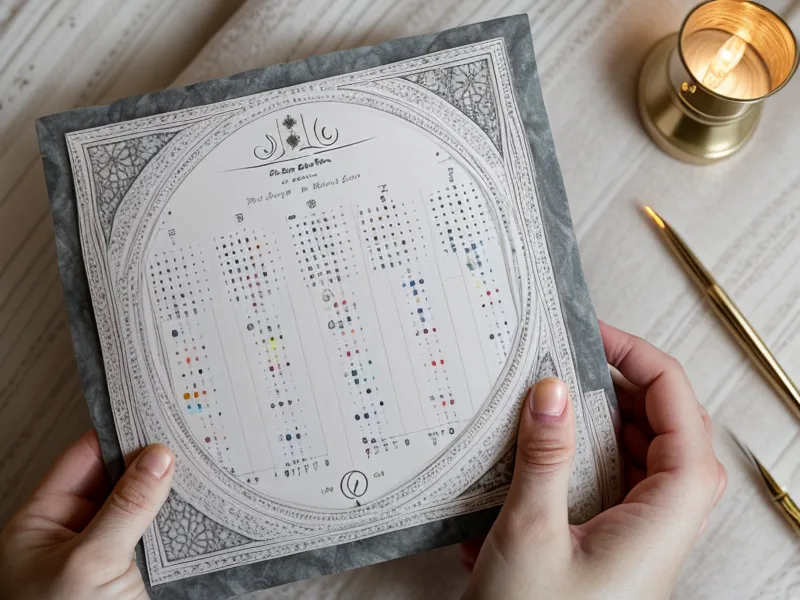
None of this requires trusting my math. Pull your current progressed Sun degree from a reliable calculator, then check which house it's sitting in on your own natal chart rather than only noting the sign. Look up the date it crosses into the next degree, since the one-degree-a-year rate makes that easy to calendar out, and line that date up against whatever's happening at work. Then go back and compare your last two or three degree shifts against actual job changes or project pivots you've already lived through — not the sign changes, the degree and house shifts. If the restlessness feels more like a misalignment between what you're good at and what pays the bills, Finding Your Professional Sweet Spot With the Part of Fortune Meaning is a better next read than waiting on a sign change that might not arrive for another twenty years. And if the house you're in overlaps with reputation or visibility at work instead, How to Improve Your Professional Reputation Using 10th House Astrology fills in the piece this article doesn't cover.
Where This Leaves Your Next Career Move
A friend of mine spends his weekends building custom mechanical keyboards from scratch, soldering individual switches for a hobby nobody's paying him for, purely because the process satisfies something in him. My spreadsheet habit isn't that far off from his hobby, even if mine comes with a chart wheel instead of a soldering iron. Most evenings it's the last thing I do before bed: pull up the chart app on my phone, watch the wheel render against a dark room, and check what degree the Sun's sitting on.
Look, I also tried the conventional route first. A career coach, solid person, gave me solid generic advice — the kind that applies to almost anyone and therefore couldn't explain why my own restlessness kept resurfacing on something close to a schedule. None of it was wrong exactly. It just wasn't built to notice a pattern that specific to me, and a generic framework can't account for a recurring pattern it was never designed to track in the first place.
On a walk around Sloan's Lake Park, turning over why a role I used to want so badly had stopped fitting, the house-versus-sign distinction is what finally made the discomfort make sense. The sign tells you the decades-long chapter you're in. The house and the aspects tell you when something inside that chapter is due to move, often years before the chapter title itself changes. If you only wait for the sign to flip, you'll miss most of the actual signal. Check the house. Check what's making an aspect to your natal Sun. That's the part worth tracking, not the zodiac sign everyone keeps watching instead.
I'm not a career counselor and definitely not a licensed financial advisor, so if a shift like this has you considering something that touches your savings or your health insurance, talk to an actual professional before the astrology talks you into anything. But if you're just trying to understand why a job that used to fit suddenly doesn't, the house and the aspect are where I'd start looking before the sign. For a deeper, done-for-you look at where your own chart is headed without building the spreadsheet yourself, a personalized report from Moon Reading is a reasonable place to start.