
A birth chart wheel is really two separate maps stacked on the same circle, and almost no beginners guide admits that before throwing the whole wheel at you. One map is the zodiac signs — twelve slices of thirty degrees each. The other map is the zodiac houses, a completely different twelve-way split anchored to the exact minute and place you were born. Nobody says up front that a natal chart is two grids competing for the same page, which is exactly why most people open an astrology app, stare at the circle for a minute, and quietly give up on reading their own birth chart. This is the tutorial I wish someone had handed me, because the two maps deserve to be learned two different ways — and weighing those two ways against each other is basically the whole point of this piece.
Look, I know how this sounds — a project manager insisting there's a right way and a faster way to read a horoscope wheel. But open an actual natal chart and it stops behaving like a horoscope. It behaves more like two overlapping spreadsheets: one tracking personality style, one tracking where in your life that style shows up. You can get a read on either one two different ways. Hand an app your birth data and take its instant summary at face value, or sit down and work the geometry out by hand, one house and one degree at a time. Both routes get you an answer. Only one of them teaches you anything you can reuse later.
Birth Chart Shortcuts vs. the Manual Wheel-Read
The app shortcut is genuinely good at what it does. Feed it your birth date, time, and city, and within seconds it hands you paragraphs about your Sun in Scorpio or your Venus in the seventh house, written in a friendly, personalized-sounding voice. It is fast, it is free or close to it, and for someone who just wants a Tuesday-afternoon nudge, that is plenty. The problem is that the summary gets generated from the same handful of templates every app in that category leans on, so two people with wildly different charts can end up with suspiciously similar paragraphs. You never see the underlying wheel, so you have no way to check the interpretation against the actual geometry, and you cannot apply the same logic to a transit that shows up six months from now.
That manual route is slower and, for the first few sessions, kind of tedious. You are staring at a circle of glyphs that looks like spilled alphabet soup, trying to figure out which symbol is Venus and which one is just a stray asterisk. But once the layout clicks, it stays clicked. You stop needing an app to tell you what a Mars-square-Uranus day feels like, because you can see the geometry yourself and reason through it the way you would a project timeline, instead of taking someone else's summary as the final word. That is the version of chart reading this piece actually teaches, mistakes and all.
Before the wheel, I tried the more conventional stress-management options first. A thirty-day mindfulness app sat on my phone for exactly one billing cycle, pinging me to breathe deeply after a meeting had already gone sideways, which is a bit like scheduling a fire drill after the building has already burned down. It solved nothing because it addressed the reaction, not the pattern underneath it. Tracking transits against my own decisions, clumsy as that sounds on paper, was the first thing that pointed at the pattern instead of just the aftermath.
Houses as Departments, Signs as Style
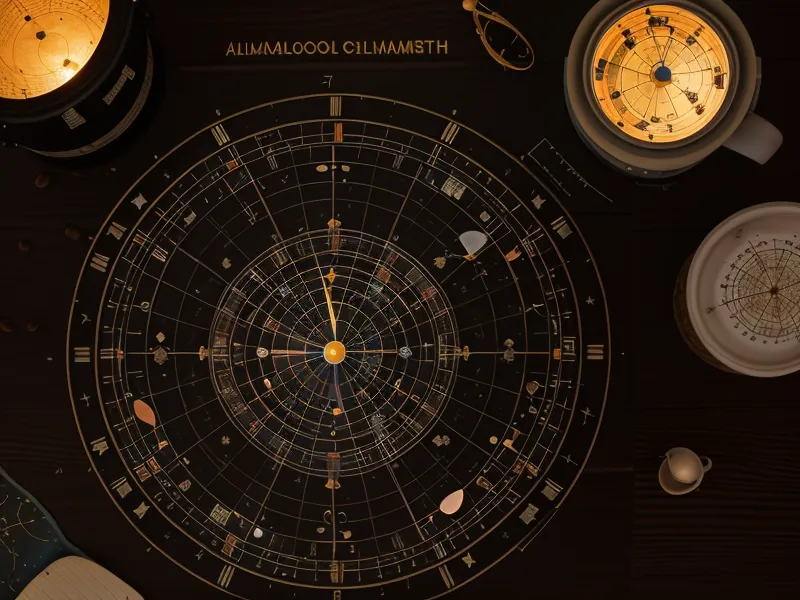
Signs and houses split the labor the way a team splits a project. The sign is the style — how something gets done. The house is the department — where in your life it shows up. If your Sun sign were a job title, the house it sits in would be the department that title actually works inside. First up in the wheel are the houses, twelve wedges numbered counter-clockwise starting from the horizontal line on the left, which marks your Ascendant. Houses one through three cover you as an individual — self-image, communication, immediate surroundings. Four through six cover home, roots, and daily routines, the operations side of your life. Seven through nine cover partnerships, contracts, and anything that stretches your worldview. Ten through twelve cover your public reputation, career, and the parts of yourself that mostly stay backstage. I went deeper on what each house actually governs in daily life in a separate piece, so I won't re-litigate all twelve here.

Locating the Ascendant and Your Big Three
Everything else in the wheel depends on getting the Ascendant right. It is the sign that was rising on the eastern horizon at your exact birth minute, and it sets the rotation for all twelve houses — get the birth time wrong by even a few minutes and the entire house layout shifts, which is the astrology equivalent of running a report off a corrupted key field. Once the Ascendant is anchored, find the Sun and Moon glyphs and note which house each one occupies, not just which sign. A Sun in the tenth house usually points to someone whose identity is wrapped up in career visibility. A Sun in the fourth often points to someone who would rather work from a kitchen table than a corner office. Together the Sun, Moon, and Ascendant make up what most people call your Big Three, and it's the one part of the chart apps tend to get right even when everything downstream of it turns generic.
The Moon moves faster than anything else on the wheel, changing signs roughly every two and a half days and finishing a full lap in about twenty-seven, a different rhythm than the Sun's slow thirty-day crawl. I've written separately about what your moon sign says about emotional patterns versus what your sun sign covers, so I'll leave that distinction there instead of repeating it. What matters for wheel-reading purposes is the house the Moon is passing through on a given day — when it moved through my sixth house, the one tied to daily routines, I plowed through my inbox like it owed me money. When it drifted into the twelfth, I was fit for nothing but a long stare out the window.
Spotting a Stellium (and Why Emmett Can't Argue With It)
Clusters are where the wheel gets genuinely interesting to look at. Stelliums sounded like made-up jargon to me the first time I heard the word, frankly — like someone had invented fancy vocabulary just to make a pile of dots sound important. A stellium is what astrologers call it when four or more planets land in the same sign or house, and the first time Celine showed me her chart, I laughed at how crowded one corner of it looked, like four department heads had all been assigned to the same tiny conference room. Wherever you spot a pile-up like that, it usually marks the area of life with the most going on, for better or worse. Emmett, a fellow skeptic I originally argued with in the comments of a Saturn-return thread, still disputes almost every interpretation I offer him, but even he doesn't argue with where his own clusters actually sit on the wheel. That, to me, is the real dividing line between the app shortcut and the manual read: interpretation is debatable, geometry mostly isn't.
Is Your Chart Fixed, or Just the Starting Line?
Some corners of astrology treat the birth wheel like a locked personality test, a single verdict on who you are for the rest of your life. Treating it that way misses the more useful half of the picture, because the planets keep moving after you're born, and wherever they are right now is constantly landing on top of your original wheel. That ongoing overlay is what people mean by transits, and it works a bit like checking today's forecast against your local climate average — the average tells you the general pattern, the forecast tells you what's actually happening today. That overlay is the actual mechanism behind why some weeks feel sharp and others feel like wading through mud. I keep a running log of my own transits against decisions I've made, which is admittedly a slightly embarrassing habit to explain at a dinner table, and it's how I noticed that the retrograde windows people joke about at work tend to line up with a real uptick in crossed wires in my inbox — I won't relitigate the mechanics of tracking retrogrades here since I've already written that up in full.
One afternoon stands out. I'd just gotten off a call that had drained me completely — the kind where you hang up and just sit there for a second — and I'd gone down to Union Station to catch a train, standing on the platform under a sky that felt unusually clear for no obvious reason. I checked my log out of habit and saw that Jupiter had stationed direct that very afternoon, after weeks of moving backward. Maybe that's coincidence dressed up as meaning, and a skeptic could probably explain the same feeling with a decent night's sleep and a change of scenery. I'm not claiming astrology is proven by a controlled study, or that a gas giant reversing direction hundreds of millions of miles away rearranged my nervous system. I'm saying the timing lined up closely enough, often enough, that I kept logging it instead of writing it off.
Most of this logging happens at the same corner desk in my apartment, one monitor running whatever project software my job needs that day and the other holding the wheel, close enough that I can flick between the two without standing up. There's a marker smudge near the keyboard from some long-forgotten planning session that I've never bothered to wipe off, and scrolling back through a year of logged transits with the arrow keys makes this quiet click-tick sound that, at this point, is basically the soundtrack of the whole hobby. I'm not going to pretend that setup makes the astrology more legitimate. It just makes the tracking easier to keep up.
There's plenty this piece is deliberately skipping. I'm not getting into moon phases and how the new-moon-to-full-moon cycle affects decision timing, or the North Node's whole purpose-and-direction angle, or a ground-up primer on what a natal chart even is in the first place — those are each their own rabbit hole and better handled on their own page. What I'm covering here is narrower: once you already have a wheel open, how do you actually read the thing, and is it worth learning to do that by hand instead of trusting an app's summary.
A Fast Way to Learn the Symbols
You don't need to memorize the entire glyph alphabet in one sitting, but a handful of shapes get you through most charts without constantly switching over to a search engine. The circle with a dot in the center is the Sun, your core identity. The crescent is the Moon, your emotional needs and habits. A circle with a small cross on top is Venus, tied to values, money, and relationships. A circle with an arrow pointing off it is Mars, your drive and how you handle conflict. And a circle with a small cross underneath is Mercury, communication and logic. Learn those five first. The rest of the glyph set fills in on its own once you're looking at real charts instead of a legend.
None of this replaces an actual professional. I have no medical or financial training, and nothing in a birth chart wheel should be the deciding factor on your health or your bank balance — if either of those feels shaky, talk to someone qualified, not a spreadsheet. What the wheel is good for is pattern recognition and a bit of structured self-reflection, not diagnosis or prediction.
So Which Way Should You Actually Learn It?
Here's the actual verdict, side by side. Reach for an app's auto-generated summary when you want a quick, low-stakes read and have no intention of digging past the surface — it's fast, it's fine for that, and there's no shame in it. Learn the manual version, houses and degrees and all, when you want to actually verify a reading yourself, track your own transits over time, or stop taking a stranger's paragraph as the final word on your own chart. I use both, depending on the day, but only one of them taught me anything I can still use six months later without opening the app again.
Either way, the wheel is just a set of coordinates — a snapshot of the sky at your first breath, nothing more mystical than that. Whether you find it a legitimate cosmic signal or just a strangely satisfying way to organize self-reflection, it holds up fine as a framework. Start with one house, one planet, and the Ascendant, and the rest of the wheel gets easier to read every time you come back to it.